

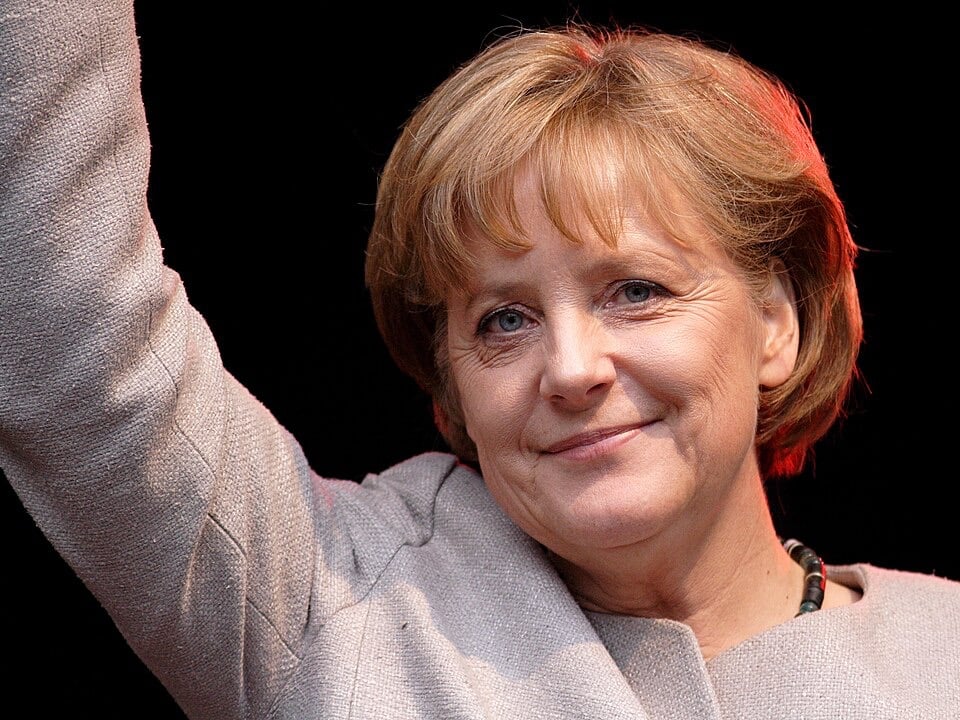
Frans Timmermans’s 2019 bid to become European Commission president, reportedly backed by Angela Merkel on the advice of outgoing president Jean-Claude Juncker, ran into resistance from Emmanuel Macron, Matteo Salvini and several Central European governments, a standoff eventually resolved when Ursula von der Leyen emerged as a compromise candidate.
Following the 2019 European Parliament elections, EU leaders became deeply divided over who should succeed Jean-Claude Juncker as European Commission president, triggering several days of tense negotiations. Amid disagreement between France and Germany over how to proceed, Angela Merkel appeared willing to step back from pursuing the presidency herself, instead lending her support, reportedly on Juncker’s advice, to Frans Timmermans, the lead candidate of the centre-left Party of European Socialists. His candidacy, however, quickly ran into opposition from several quarters, including French President Emmanuel Macron and Italy’s Matteo Salvini, and the deadlock was ultimately broken only when Germany’s then defence minister, Ursula von der Leyen, emerged as a compromise choice.
A contested selection process
Under the EU’s so-called Spitzenkandidat system, European political groups nominate lead candidates for the Commission presidency ahead of European Parliament elections, though EU leaders are not legally required to select one of them. Timmermans stood as the Spitzenkandidat for the Party of European Socialists following the 2019 elections. Macron, however, was sceptical of automatically appointing whichever Spitzenkandidat had the backing of the largest bloc, and instead pushed for a broader search for a candidate capable of commanding support across the European Council.
Who was Frans Timmermans?
A Dutch politician, Timmermans had served as First Vice-President of the European Commission from 2014 to 2019 under Juncker, with responsibility for the rule of law, institutional relations and better regulation, in addition to his role as the Netherlands’ foreign minister. Within the outgoing Commission, he was regarded as a close ally of Juncker, and his supporters argued his nomination would offer continuity with the existing leadership. Timmermans had also initiated the Joint Investigation Team inquiry into the 2014 downing of Malaysia Airlines Flight MH17, which concluded the aircraft had been brought down by a Russian-made Buk missile system transported into eastern Ukraine from Russia, a finding Moscow has consistently rejected. He had also previously been reported as criticising Donald Trump, a point that drew attention given the tensions in the broader EU-US relationship at the time.
Objections from Central Europe
Timmermans’s nomination faced strong opposition from Poland, Hungary and the Czech Republic, whose governments objected to his past criticism of their judicial reforms and broader rule-of-law records during his time as First Vice-President.
Resistance from Italy
In Italy, Matteo Salvini argued that Timmermans’s positions on migration and European integration conflicted with Italy’s own stance, and opposed his candidacy on those grounds. Reports at the time also pointed to separate friction between Italy and the Netherlands involving a Dutch-flagged vessel and maritime tensions connected to migration, which added to the sense of strain between Rome and The Hague during the negotiations, alongside Salvini’s broader policy objections.
A compromise emerges
Manfred Weber, the candidate of the centre-right European People’s Party, had earlier failed to secure sufficient backing to become Commission president in his own right. With both Timmermans and Weber unable to command the necessary consensus, EU leaders eventually settled on Ursula von der Leyen, then serving as Germany’s defence minister, as a compromise candidate. She went on to become President of the European Commission, while Timmermans remained within the Commission, later taking on the role of Executive Vice-President for the European Green Deal, in which he oversaw much of the EU’s climate policy agenda.
The wider backdrop
The negotiations played out against a backdrop of broader disagreements over the Franco-German bloc’s approach to foreign policy. Germany and France, together with the UK, had established INSTEX, the Instrument in Support of Trade Exchanges, in 2019 to facilitate limited humanitarian trade with Iran while avoiding US sanctions following Washington’s withdrawal from the Iran nuclear deal. Nord Stream 2, the Russia-to-Germany gas pipeline running beneath the Baltic Sea, remained highly controversial, with critics arguing it deepened Europe’s dependence on Russian energy while bypassing transit countries such as Ukraine. These issues, alongside separate debates over Germany’s defence spending and its contribution to NATO, formed part of the wider political context in which the battle over the Commission presidency, and Timmermans’s candidacy in particular, took place.
