

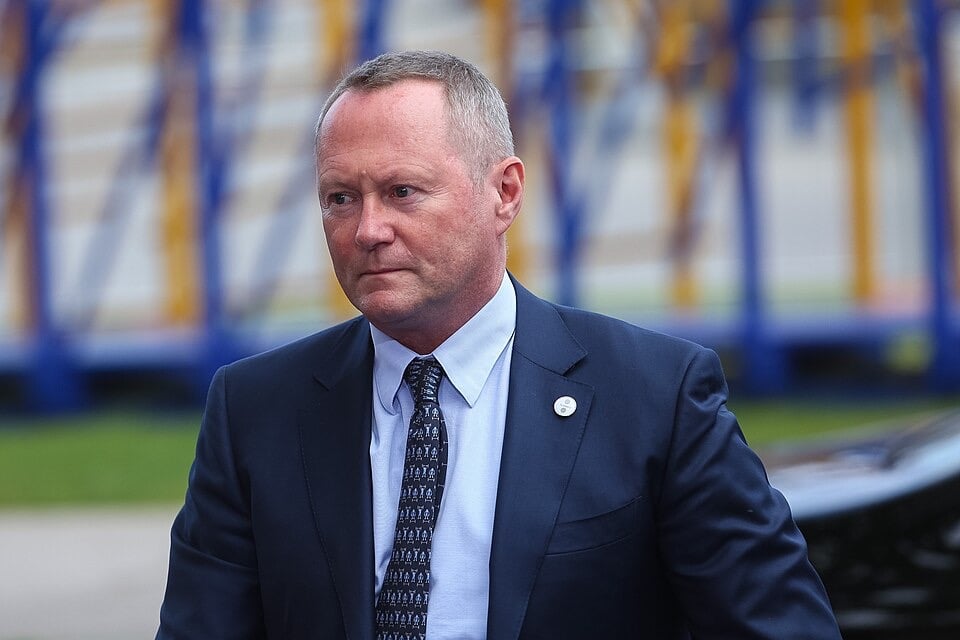
The Council of Europe’s Commissioner for Human Rights, Michael O’Flaherty, has written to Poland’s Minister of Interior warning that legislation suspending access to asylum at the Poland-Belarus border is reportedly being applied even to people who never crossed that border, including Afghan nationals said to have been returned home without the chance to seek protection.
Michael O’Flaherty, the Council of Europe’s Commissioner for Human Rights, has published a letter addressed to Poland’s Minister of Interior raising concerns over how the country is applying legislation that allows access to asylum to be temporarily suspended at its border with Belarus. According to the letter, Polish authorities are applying the suspension in every case where border guards judge that a person crossed the border irregularly, a category that reportedly extends to people who travelled, or attempted to travel, to other EU member states before being returned or refused entry back at the Polish border.
What the letter says
O’Flaherty, who has previously raised concerns about the denial of asylum access at Poland’s border, said in the letter that the suspension of asylum access now appears to be applied beyond the immediate border context itself. He specifically drew attention to recent reports that Afghan nationals had been returned to Afghanistan without being given the opportunity to apply for asylum. Citing the case-law of the European Court of Human Rights, the Commissioner said that any removal of an individual must be preceded by a rigorous, individualised risk assessment, and that everyone affected must have a genuine and effective opportunity to challenge their expulsion. He has invited Polish authorities to set out what measures they have taken to ensure their asylum and migration policies comply with the European Convention on Human Rights.
Who is the Council of Europe’s Commissioner for Human Rights?
The Commissioner for Human Rights is an independent institution within the Council of Europe, tasked with promoting and protecting human rights across the organisation’s member states. The Council of Europe is a separate body from the European Union, comprising 46 member states, with a mandate focused on human rights, democracy and the rule of law.
The legal framework behind the concerns
The concerns raised in the letter relate specifically to Article 3, which prohibits torture and inhuman or degrading treatment, and Article 13, which guarantees the right to an effective remedy, both under the European Convention on Human Rights, provisions that can come into play in asylum and removal cases. Central to the Commissioner’s argument is the principle of non-refoulement, a cornerstone of international refugee law under which states must not return individuals to a country where they would face a real risk of persecution, torture or other serious human rights violations. The 1951 Refugee Convention and its 1967 Protocol, which together form the foundation of international refugee protection, require states to assess each asylum claim individually rather than through blanket measures. The European Court of Human Rights has itself repeatedly ruled that governments must carry out an individual assessment before removing anyone who may be seeking international protection, rather than relying on automatic procedures. Afghanistan has remained one of the largest source countries for asylum seekers in Europe since the Taliban returned to power in August 2021, and a number of international organisations have warned that certain groups from the country continue to face heightened risk if returned.
Poland’s position on border security
Since 2021, Poland has significantly reinforced security along its border with Belarus, including the construction of a 5.5-metre-high steel barrier fitted with electronic surveillance systems. Polish authorities have argued that many of the attempted crossings from Belarus form part of a hybrid operation orchestrated by the Belarusian government, which Warsaw says has actively encouraged migrants to attempt to cross into the EU in response to Western sanctions imposed on Belarus. Poland maintains that its border measures are necessary to protect national security and safeguard the integrity of the EU’s external frontier in the face of what it describes as organised irregular migration facilitated by Belarus. The European Union has broadly backed Poland’s efforts to secure its external border, while also stressing that member states must continue to meet their obligations under both EU asylum law and international human rights law.
Part of a wider pattern
Human rights organisations have continued to raise concerns about pushback practices at several of the EU’s external borders more broadly, arguing that individuals should be given access to asylum procedures regardless of how they entered a country. The letter from O’Flaherty adds to this ongoing debate, placing renewed pressure on Polish authorities to demonstrate that their asylum and migration policies remain compatible with the country’s obligations under the European Convention on Human Rights.
