

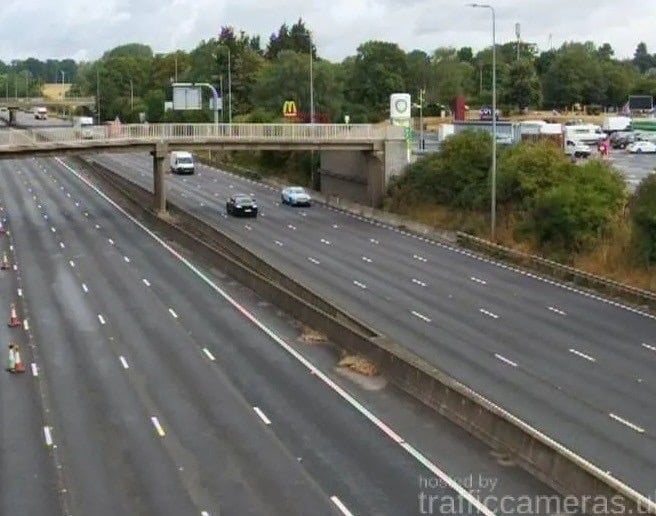
A stretch of the M1 has remained closed since last night after a lorry crashed and overturned, leaving drivers facing miles of queues while National Highways carries out recovery work between Northampton and Crick.
A section of the M1 has been shut for recovery work after a lorry crashed and overturned, leaving drivers stuck in miles of tailbacks. The M1 northbound remains closed today between Junction 16 at Northampton and Junction 18 at Crick, following what has been described as a serious collision the previous evening. National Highways said that while all southbound lanes have since reopened, work is continuing on the northbound carriageway, with current delays running at more than half an hour and queues stretching back around three miles.
How the crash unfolded
Emergency services were called to the scene shortly after the lorry crashed and overturned on the motorway at around 10pm the night before. Crews worked through the night at what has been described as a chaotic scene, with a full collision investigation completed before morning. National Highways officers have remained at the site since, helping to manage traffic around the affected stretch of road.
Disruption expected to continue
National Highways confirmed the ongoing closure in a statement, saying the M1 “remains closed northbound between J16 Northampton and J18 Crick for recovery works” following the collision, while confirming that “all lanes are now open southbound.” The agency has indicated that the current closure is likely to remain in place until later in the day, as what it described as “complex recovery work,” along with potential emergency resurfacing, continues.
Why recovering an overturned lorry takes so long
Clearing an overturned heavy goods vehicle from a motorway is typically a far more involved process than recovering a car. Operations of this kind often require heavy-duty recovery cranes capable of lifting vehicles weighing more than 40 tonnes, significantly extending the time needed compared with standard vehicle recoveries. An overturned lorry can also spill fuel, oil or cargo onto the carriageway, sometimes requiring an environmental clean-up and, in more serious cases, resurfacing work if hazardous substances have damaged the road itself. Before any vehicles can be removed, police collision investigators typically need to document the scene in detail, using photography, measurements and other forensic evidence. Following serious collisions involving HGVs, National Highways may also carry out specialist inspections to check for damage to the carriageway, crash barriers and drainage systems before reopening the road, with emergency resurfacing sometimes required if the impact has caused deep gouges, structural damage or contamination. Because of their size, weight and cargo, HGVs are responsible for a disproportionate share of lengthy motorway closures compared with incidents involving cars alone.
Wider disruption and advice for drivers
Closures of this length often push traffic onto local A-roads and through surrounding towns and villages, as drivers search for alternative routes around the affected stretch. National Highways is using traffic officers, overhead electronic signs and designated diversion routes to help manage the flow of traffic and limit disruption while work continues. Motorists have also been advised against following satellite navigation shortcuts during major motorway closures unless specifically directed to do so, since unofficial diversions can overload residential roads and potentially delay emergency vehicles responding to other incidents.
About the M1
The M1 is one of the UK’s busiest motorways, running for approximately 193 miles, or 311 kilometres, between London and Leeds, and carrying tens of thousands of vehicles every day, meaning closures of this kind can have a significant knock-on effect on journeys across a wide area.
