

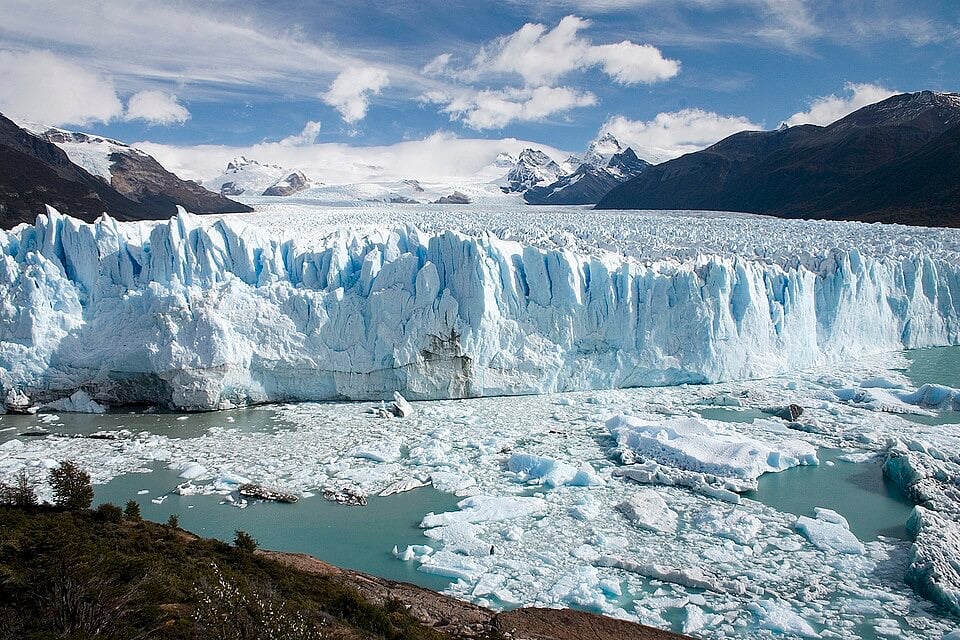
A section of ice roughly the size of Manhattan has broken away from Pine Island Glacier in West Antarctica, one of the continent’s fastest-moving and most closely watched glaciers, in a calving event scientists have linked to warming ocean and air temperatures.
A massive slab of ice, roughly the size of Manhattan and covering an estimated 225 square kilometres, broke away from Pine Island Glacier in West Antarctica, an event first noticed in November 2016. Researchers have warned that a further crack could open up at the point where the ice broke free, potentially releasing an even larger mass into the ocean. Scientists attribute the calving event to the warming of both the surrounding ocean and the continent itself, part of a broader pattern of change now being observed across Antarctica.
What is a calving event?
The break-off is what scientists call a calving event, the natural process by which large chunks of ice separate from glaciers. While calving happens naturally, researchers say some glaciers are now producing larger and more frequent calving events as the climate warms. Pine Island Glacier is considered one of Antarctica’s fastest-moving glaciers and one of the continent’s most vulnerable to climate change. It drains part of the West Antarctic Ice Sheet, which holds enough ice to raise global sea levels by several metres were it to melt completely over the coming centuries.
The glacier is being weakened primarily by warm ocean water flowing beneath its floating ice shelf, which melts the ice from underneath and gradually destabilises its structure. Scientists track these changes using satellite monitoring, allowing them to spot new cracks, measure the glacier’s movement, and estimate the size of icebergs as they break away. Since the 1990s, Pine Island Glacier has accelerated significantly, with its grounding line, the point at which the glacier begins to float on the ocean, steadily retreating further inland. Alongside its neighbour, Thwaites Glacier, Pine Island accounts for a substantial share of Antarctica’s current contribution to rising global sea levels. The iceberg that broke away in 2016 eventually drifted into the Amundsen Sea, where it gradually fractured into smaller pieces before melting away entirely.
Record temperatures on a warming peninsula
The calving event came against a backdrop of wider changes across Antarctica, including reports of thousands of small and large meltwater ponds forming on the continent’s ice sheets. Around the same period, the World Meteorological Organization, an agency of the United Nations, highlighted some of the highest temperatures ever recorded in the Antarctic region, including a reading of 19.8°C at Signy Island in 1982 and 17.5°C at Argentina’s Esperanza research base in 2015, figures that stand out sharply against a typical Antarctic summer average of around -20°C.
While isolated high readings of this kind are not necessarily alarming on their own, scientists have pointed to the broader warming trend on the Antarctic Peninsula, the region nearest to South America, which has been warming at roughly three times the global average rate, making it one of the fastest-warming regions anywhere on Earth, according to available research, although warming trends vary across different parts of the continent. Around 87 per cent of glaciers in the region are reported to have retreated over the past 12 years. Michael Sparrow, an expert at the WMO, has argued that the weather and conditions across the continent still need to be studied in much greater depth and detail.
Understanding Antarctica’s ice
Antarctica is generally divided into three regions: East Antarctica, West Antarctica and the Antarctic Peninsula, with West Antarctica experiencing considerably faster ice loss than the east of the continent in recent decades. It’s worth distinguishing between Antarctica’s sea ice and its ice sheet, since the two behave very differently: sea ice forms from frozen ocean water and melts back each season, while the ice sheet consists of land-based ice that, when it melts into the ocean, directly contributes to global sea-level rise. Together, Antarctica holds around 90 per cent of the planet’s ice and roughly 70 per cent of the world’s fresh water, making it one of the single most important regions for understanding future changes in global sea levels.
Why it matters
Scientists estimate that if all of Antarctica’s ice were to melt, global sea and ocean levels would rise by as much as 60 metres. Even a far smaller rise of one to two metres would be enough to submerge large parts of many major coastal cities around the world. Researchers have also warned that continued warming could trigger what is known as marine ice-sheet instability, a process in which retreating glaciers become increasingly difficult to halt once they pass a certain point, potentially accelerating sea-level rise over the long term.
