

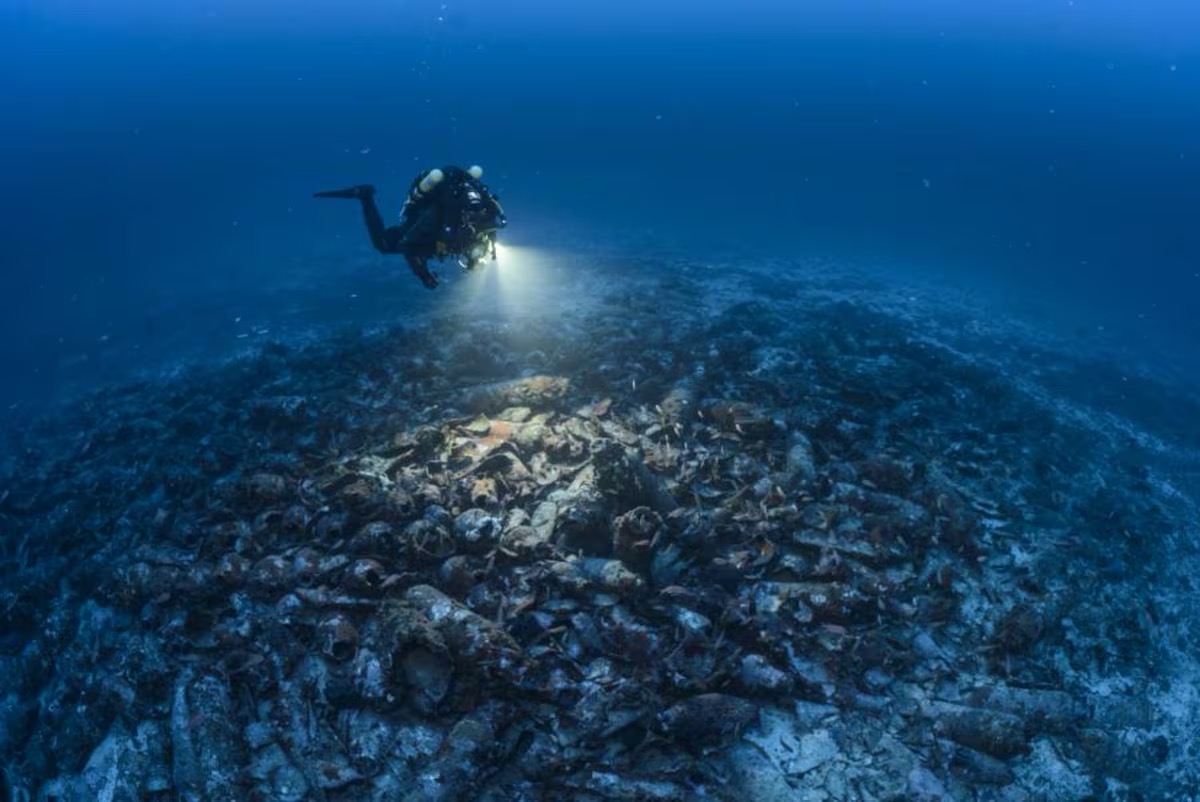
Spanish archaeologists have discovered an exceptionally well-preserved Roman shipwreck off the tiny island of Cabrera, believed to have been carrying garum, a prized fermented fish sauce, in what researchers describe as one of the most intact ancient wrecks ever found in Spanish waters.
Marine archaeologists in Spain have uncovered a remarkably well-preserved Roman shipwreck that sank roughly 1,800 years ago off the small island of Cabrera, near the southern coast of Mallorca. The vessel, thought to have been transporting garum, a fermented fish sauce prized across the Roman world, was located in waters 70 metres deep and documented by professional divers in October 2016. The discovery is being led by the Balearics Institute for the Study of Marine Archeology (IBEAM), which says the wreck is the best-preserved example of its kind found anywhere in the Balearic archipelago.
A chance discovery by local fishermen
The wreck was first suspected to exist after local fishermen noticed fragments of amphorae, the large ceramic jars used throughout the Roman world to transport goods, turning up in their nets near the uninhabited islet. Their tip-off led IBEAM to send a robotic probe to investigate the area in April 2016, which captured images of a large mound of amphorae of varying sizes spread across roughly 15 metres of seabed. A more extensive search followed that October, when two professional divers working under IBEAM’s direction carried out a detailed survey, a task made considerably harder by the depth at which the wreck lies. The dive produced around 2,000 images, which have allowed researchers to establish the size of the vessel and will support a detailed study of the wreck expected to be published in the coming months.
An exceptionally well-preserved find
At 70 metres, or roughly 230 feet, below the surface, the wreck lies beyond the reach of recreational divers, requiring specialist technical diving equipment and remotely operated vehicles to explore. According to IBEAM, many of the estimated 1,000 to 2,000 amphorae on board remain in their original positions, with the ship itself, buried beneath its cargo, and its contents left essentially undisturbed for close to two thousand years. Javier Rodríguez, one of the marine archaeologists involved in exploring and documenting the wreck, said it represented “the first time that a completely unaltered wreck has been found in Spanish waters,” describing the vessel as an “architectural jewel.” Researchers have likened the site to a time capsule, noting it appears to have suffered little disturbance from looters, fishing activity or strong currents over the centuries. Many of the amphorae remain sealed beneath layers of sediment, raising hopes that organic remains or other artefacts inside could still be preserved for scientific study.
Why the wreck survived intact
Two factors are thought to have been crucial to the ship’s remarkable state of preservation: its difficult-to-reach location, and the fact that the surrounding waters fall within a National Park. The Cabrera Archipelago Maritime-Terrestrial National Park provides legal protection for underwater archaeological sites in the area, helping to shield historic wrecks like this one from illegal salvage.
Cargo built for Roman trade
Archaeologists believe the ship, estimated at around 20 metres in length, dates from the third or fourth century, placing it firmly within the Roman imperial period. It is thought to have carried up to 2,000 clay jars, most around a metre in size and originating from North Africa, alongside a smaller number of containers from southern Portugal. Amphorae of this kind were used widely across the Roman Empire to transport foodstuffs including wine, olive oil and fish products. Researchers believe the vessel was trading between North Africa and ports in Hispania, the Roman name for the Iberian Peninsula, with possible onward routes to southern France and even Italy.
Central to its cargo was garum, one of the most valuable condiments of the Roman world, produced by fermenting fish with salt and exported widely across the Mediterranean. Sebastiá Munar, IBEAM’s scientific director, explained that in antiquity it was “considered a delicacy and very much in demand in Roman society.” Ships of this size typically relied on square sails and seasonal trade winds to move goods between ports scattered across the Mediterranean during the imperial period.
Studying the wreck without disturbing it
To document the site while keeping it intact, marine archaeologists have built a high-resolution three-dimensional digital model of the wreck from thousands of underwater photographs, allowing researchers to study it in detail without physically disturbing the seabed. Experts involved in the project say preserving the wreck in situ remains the preferred approach for now, warning that removing artefacts prematurely could damage valuable archaeological evidence before it can be properly studied.
Part of a wider archaeological treasure trove
This latest find is the twelfth wreck from antiquity to be discovered within the waters of the Cabrera Archipelago Maritime-Terrestrial National Park, an area regarded as one of Spain’s richest underwater archaeological regions thanks to its position along historic Mediterranean shipping routes. Munar has stressed the importance of compiling a comprehensive map of the area’s marine archaeological assets before they risk being damaged or looted. Archaeologists hope that further study of the wreck will shed new light on Roman trade networks, shipbuilding techniques and the commercial links that once connected North Africa with western Europe during the empire’s height.
